Why Are There So Many Types of Caviar? A Guide to Species, Taste & Quality
Caviar comes in many different types because it is produced from different species of sturgeon, each with its own flavour, texture, and characteristics. Factors such as the age of the fish, farming environment, and production methods all play a role in shaping the final caviar.
Much like wine, caviar is not a single product but a category - one defined by origin, time, and craft. From Oscietra to Siberian and Beluga, each variety offers a distinct expression of this delicacy.
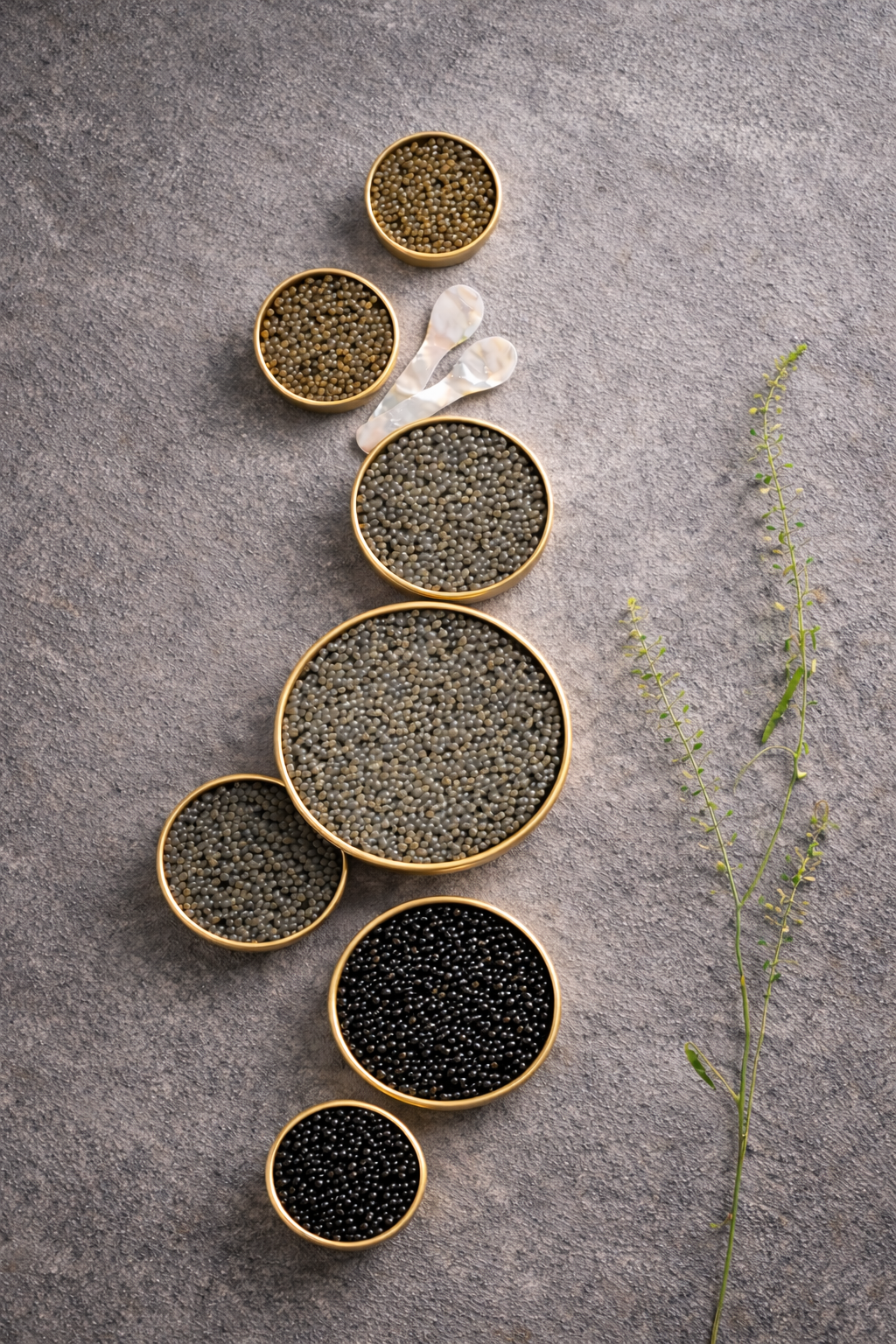
1. Different Species Create Different Types of Caviar
The primary reason there are so many types of caviar is simple: they come from different species of sturgeon.
Much like grape varieties in the wine world — where a Pinot Noir expresses itself completely differently to a Cabernet Sauvignon — each sturgeon species produces roe with its own distinct identity.
Each species offers a unique expression:
Oscietra (Acipenser gueldenstaedtii) - medium to large pearls, golden to olive tones, creamy and nutty
Siberian (Acipenser baerii) - smaller, darker pearls, more intense and structured flavour
Beluga (Huso huso) - large, delicate pearls with an exceptionally soft, buttery texture and a refined, subtle finish
Kaluga (Huso dauricus) - large, glossy eggs with a smooth, rounded profile, often compared to Beluga for its richness and elegance
Naccarii (Acipenser naccarii) - refined, medium-sized pearls with a silky texture and a clean, elegant flavour, often showing subtle nutty and mineral notes
Transmontanus (Acipenser transmontanus) - medium to large pearls with a firm texture and a balanced profile, combining gentle brininess with buttery undertones
This is why caviar varieties are not interchangeable - each one delivers a completely different tasting experience, much like choosing between different wine varietals.
2. Environment Shapes Flavour and Quality
Even within the same species, caviar can vary significantly depending on where and how the sturgeon is raised.
Key factors include:
water quality and temperature
feed and nutrition
farming methods and handling
overall stress levels of the fish
This is the caviar equivalent of terroir - the environmental conditions that influence taste. Just as soil and climate shape the profile of a wine, these elements define whether a caviar leans towards clean and mineral, or rich and buttery.
3. Production Methods Refine the Final Result
Caviar processing is minimal, but incredibly precise.
After harvesting, the roe is:
gently cleaned
carefully graded
lightly salted (malossol, meaning low salt)
Here, the producer plays a role similar to a winemaker - guiding the final expression without overpowering it. The goal is not to transform the product, but to preserve and elevate what nature has already created.
4. Grading Creates Even More Variety
Within each species, there are multiple grades of caviar.
These are determined by:
pearl size
colour (from deep black to golden hues)
firmness and texture
flavour profile
Much like different classifications or vintages in wine, these subtle distinctions create a spectrum of quality and style within the same varietal. One Oscietra may be bold and structured, while another is delicate, buttery, and almost floral.
5. Natural Variation and Rarity
Caviar is a natural product, and variation is part of its beauty.
Some sturgeon produce:
rare golden or albino roe
unusually large pearls
exceptionally delicate textures
These rare expressions are comparable to exceptional vintages or limited vineyard releases - not something that can be manufactured, only discovered and appreciated.
Understanding Caviar Through Its Diversity
Caviar is not standardised. It evolves.
Like wine, it reflects a combination of species, environment, time, and craftsmanship. Each tin represents a unique moment - a balance of nature and human precision.
Understanding the different types of caviar is not just about luxury. It is about recognising the depth, variation, and artistry behind one of the world’s most refined foods.